
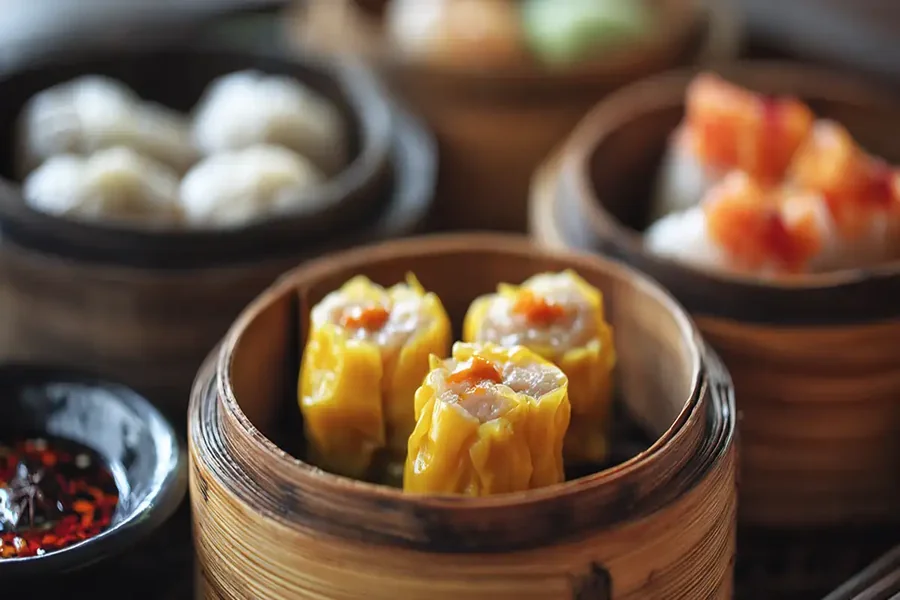
Walk into a busy Chinese restaurant on a weekend morning and you’ll hear the words “yum cha” and “dim sum” used almost interchangeably. For many diners, both mean bamboo steamers, shared plates, tea poured constantly, and the small thrill of spotting something irresistible on a trolley before it passes your table.
That overlap is part of the reason the terms get confused. They often appear together, especially in Cantonese dining culture, but they don’t mean exactly the same thing. Understanding the meaning of yum cha compared with dim sum gives the experience more context, and makes ordering feel far less like guesswork.
Yum Cha Is the Experience
Yum cha literally refers to “drinking tea”. In practice, it describes the dining occasion built around tea, conversation, and a rolling selection of small dishes. It’s social, generous and unhurried. You don’t usually sit down for one main meal; you settle in, share, taste, compare, and keep the table moving.
This is why yum cha has such a strong sense of ritual. Tea arrives early. Dishes are shared across the table. Someone might take charge of ordering, while everyone else points, nods or negotiates over the last dumpling. The meal has rhythm. It’s not just about what’s eaten, but how the table interacts.
In Australia, “going for yum cha” has become shorthand for the whole event, especially in cities with strong Cantonese dining traditions. It usually means a daytime meal with friends or family, often on weekends, where variety matters more than a single signature dish.
Dim Sum Is the Food
Dim sum refers to the small dishes served during yum cha. These can include dumplings, buns, rolls, cakes, pastries, vegetables, rice noodle rolls and desserts. Some are steamed, some are fried, some are baked, and many are designed to be eaten in just a few bites.
Think har gow, siu mai, char siu bao, cheung fun, turnip cake, sesame balls and egg tarts. These are dim sum dishes. They may be served as part of yum cha, but dim sum itself is the food category.
That distinction matters because you can technically eat dim sum without having the full yum cha experience. A restaurant might offer dim sum dishes from a menu at dinner, through takeaway, or as part of a more modern à la carte format. The dishes are still dim sum, even if the broader tea-led dining ritual isn’t happening.
Why the Two Terms Became Interchangeable
The confusion is understandable because yum cha and dim sum are deeply connected. In many restaurants, you go to yum cha to eat dim sum. The terms live side by side in real life, not just in language.
There’s also the influence of restaurant signage and local habit. Some venues advertise “yum cha” because it signals the experience. Others promote “dim sum” because it describes the dishes. Diners then repeat whichever term they’ve grown up hearing. Over time, the distinction softens, particularly outside Cantonese-speaking communities.
In everyday conversation, the mix-up usually isn’t a problem. If someone says, “Let’s get dim sum,” most people know what they mean. If they say, “Let’s go for yum cha,” the same applies. The difference becomes more useful when you’re trying to understand the menu, respect the tradition, or explain the experience accurately.
Why the Difference Matters
Knowing the difference helps diners order with more confidence. If you’re looking for the full social meal, yum cha is the phrase that captures it. If you’re talking about the individual dishes, dim sum is more precise.
It also helps preserve the cultural meaning behind the meal. Yum cha isn’t just a service style; it reflects a long-standing Cantonese tradition of gathering over tea and small plates. The tea isn’t incidental. It balances rich, savoury and fried dishes, resets the palate, and gives the meal its relaxed pace.
Dim sum, meanwhile, reflects craftsmanship. Many dishes rely on careful folding, wrapping, steaming, seasoning and textural contrast. A good dumpling wrapper should be delicate but resilient. A steamed bun should feel soft and light. A rice noodle roll should be silky, not gluey. When you separate the experience from the food, you can appreciate both more clearly.
It Changes How You Eat
Understanding yum cha as a shared experience also changes the way you approach the table. The best meals aren’t built from ordering too much too fast. They develop gradually. Start with a few familiar dishes, add something new, keep tea flowing, and leave space for sweet items at the end.
It also encourages a more communal mindset. Yum cha isn’t ideal for guarding your own plate. It rewards curiosity and generosity. Everyone gets a little of everything. Someone discovers a new favourite. Someone else insists they know which dumpling is best. That’s part of the fun.
Dim sum, on the other hand, invites attention to detail. Rather than treating every basket as “just dumplings”, you start noticing the differences between fillings, wrappers, cooking methods and sauces. The meal becomes more interesting because the categories become clearer.
A Small Distinction with a Bigger Story
People mix up yum cha and dim sum because the two are naturally intertwined. One describes the occasion; the other describes much of what’s eaten during it. In casual dining, the terms often overlap without causing much confusion.
Still, the difference matters. It gives diners a better sense of what they’re ordering, what they’re participating in, and why this style of meal has lasted across generations. Yum cha is the gathering, the tea, the pace and the shared table. Dim sum is the collection of small dishes that makes the table worth gathering around.
Together, they create one of the most enjoyable ways to eat: varied, social, flavourful and built for conversation.

Rockies Ripple is the founder and lead writer behind the independent blog tvplutos.com