
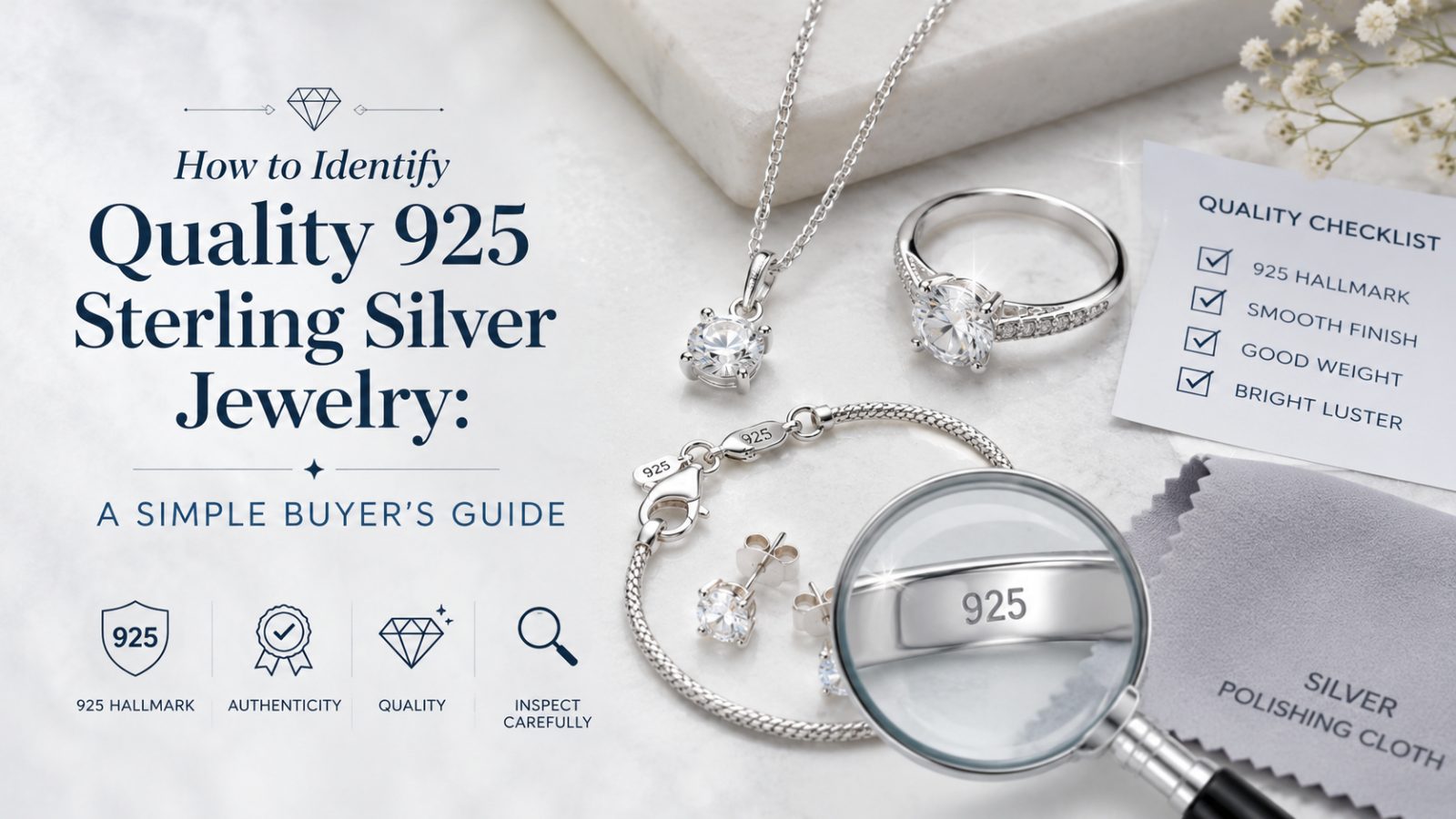
If you’ve ever picked up a “silver” ring or necklace and wondered, is this actually real? — you’re not alone. Sterling silver is one of the most popular metals in jewelry today, but it’s also one of the most faked. The good news? You don’t need to be a gemologist to tell the difference. You just need to know what to look for.
In this guide, we’ll walk through exactly how to spot genuine 925 sterling silver, the tests you can do at home, and a few red flags that should make you think twice before buying.
What Does “925 Sterling Silver” Actually Mean?
Pure silver is soft — too soft, in fact, to hold its shape in everyday jewelry. That’s why jewelers mix it with other metals (usually copper) to make it more durable. The result is sterling silver: 92.5% pure silver and 7.5% other metals, which is exactly where the “925” stamp comes from.
So when you see “925” stamped on a piece, it’s telling you the metal composition — not the brand, and not the price. It’s simply the industry standard for what counts as “real” sterling silver.
1. Look for the 925 Hallmark
This is the first and easiest thing to check. Genuine sterling silver jewelry is almost always stamped with “925,” “Ster,” “Sterling,” or sometimes “.925.” You’ll usually find this stamp:
- On the inside of a ring band
- Near the clasp of a necklace or bracelet
- On the post or back of an earring
Use a magnifying glass if the stamp is small or worn. Keep in mind, though — a stamp alone isn’t proof. Some counterfeit pieces are stamped “925” even when they’re not real silver at all, which is why the next few tests matter just as much.
2. Do the Magnet Test
Real silver is not magnetic. If you hold a strong magnet near the jewelry and it sticks or pulls noticeably, that’s a sign the piece contains steel or another magnetic base metal instead of real silver. This is one of the quickest tests you can do at home, and it’s a great first filter — especially if you’re buying jewelry in bulk from wholesale jewelry suppliers and want to spot-check a batch quickly.
3. Check for Tarnish (Yes, Tarnish Is a Good Sign)
It sounds backwards, but tarnishing is actually proof of authenticity. Real sterling silver reacts naturally with air and moisture over time, developing a slight darkening or patina — especially in the crevices of detailed designs. Silver-plated or fake pieces often don’t tarnish at all because they’re coated with metals that resist the reaction.
If a piece has been sitting for months and still looks flawlessly shiny with zero signs of aging, that’s worth a second look.
4. Try the Smell and Feel Test
Real silver has almost no smell. If a piece has a strong metallic or “coin-like” odor, it likely contains a high amount of copper or other base metals reacting with your skin — a sign it isn’t genuine 925 silver.
Weight matters too. Sterling silver has a solid, substantial feel in your hand. Cheap alloys or hollow pieces made to imitate silver often feel unusually light.
5. Look at the Color and Shine
Genuine sterling silver has a bright white-gray shine with a subtle warmth to it — not the icy, almost blue-white brightness of stainless steel or the yellowish tint you sometimes see in low-quality alloys. It’s a small difference, but once you’ve handled real silver a few times, your eye starts to catch it quickly.
6. Use the Ice Test (Silver Conducts Cold Fast)
Here’s a fun one: silver is one of the best conductors of heat and cold of any metal. Place an ice cube on the jewelry — if it melts noticeably faster than it would on a table or other metal, that’s a strong indicator you’re holding real silver.
7. Be Wary of Prices That Seem Too Good
Silver prices fluctuate with the market, but they don’t swing wildly overnight. If a “sterling silver” piece is priced dramatically lower than similar items elsewhere, that’s often a sign it’s silver-plated, silver-filled, or not silver at all. This is especially important to keep in mind if you’re sourcing wholesale jewelry for resale — a deal that looks amazing on paper can quietly hurt your reputation with customers if the metal quality doesn’t hold up.
8. Buy From Reputable Sellers and Ask for Documentation
Honestly, one of the best ways to guarantee quality is to simply buy smart. Reputable retailers and established wholesale jewelry suppliers will happily provide certification, material breakdowns, and clear hallmark information for every piece they sell. If a seller can’t or won’t answer basic questions about the metal content, treat that as a warning sign.
When you’re buying wholesale jewelry for a store, boutique, or online shop, this step becomes even more important. Your customers are trusting you to vouch for what you’re selling, so it pays to only work with wholesale jewelry vendors who are transparent about sourcing, hallmarking, and testing standards.
9. When in Doubt, Get It Professionally Tested
For anything high-value, or if you’re buying in larger quantities, a jeweler can run an acid test or use an electronic silver tester in minutes. It’s a small cost that gives you complete peace of mind — particularly useful if you’re building a relationship with new wholesale jewelry suppliers and want to verify quality before committing to a larger order.
Quick Recap: Your At-Home Silver Checklist
- ✅ Check for a 925, Ster, or Sterling hallmark
- ✅ Test with a magnet — real silver won’t stick
- ✅ Look for natural tarnish over time
- ✅ Check for a metallic smell or unusually light weight
- ✅ Compare color and shine to known sterling pieces
- ✅ Try the ice-melt trick
- ✅ Question prices that seem too low
- ✅ Buy from trusted sellers who provide documentation
- ✅ Get a professional test done for bigger purchases
Final Thoughts
Sterling silver jewelry is beautiful, affordable, and versatile — but only when it’s the real deal. Whether you’re buying a single piece for yourself or sourcing wholesale jewelry to sell in your own store, taking a few extra minutes to verify quality can save you from disappointment (and protect your reputation with customers down the line).
If you’re in the business of buying and reselling, building a relationship with trustworthy wholesale jewelry suppliers is honestly the single best long-term investment you can make. Look for suppliers who are upfront about their hallmarking, offer documentation, and have a track record of consistent quality — that’s the foundation of a business customers keep coming back to.

Rockies Ripple is the founder and lead writer behind the independent blog tvplutos.com