
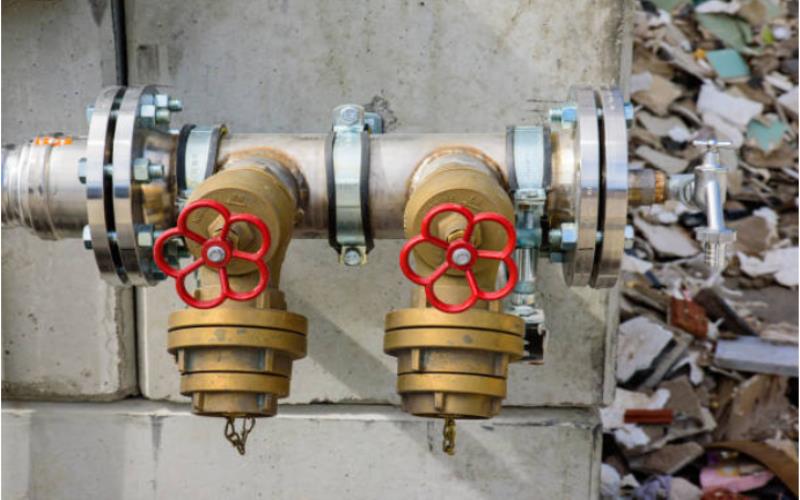
The migration from manual to automation control of the valve ad has been a major shift in the industry especially in the aspect of fluid management systems where precision, efficiency, and safety has been pushed to another level. As actuadores hidraulicos and electric actuators continue to evolve, they bring sophisticated control capabilities to complex systems, enabling seamless operation and substantial efficiency improvements across various industries.
Introduction to Valve Actuators
Valve actuators are very important in current automation and control technology since they are the heart of fluid control in various industries. These devices have evolved from simple mechanical devices to fully intelligent systems capable of carrying out choreographed instructions from master control systems. The changes in actuators therefore cover technology developments such as higher dimensions of working precision, reliability, and connectivity with digital control devices.
Actuators serve not only to open and close valves anymore; they became an essential part of diagnostics, optimization, and predictive maintenance practices. Actuators decrease the amount of work that has to be done by people in industries, minimize the impact that might be caused by employees’ mistakes and increase the general safety of the processes. They make it possible to work from a distance, which is very useful in conditions when a person’s presence could be dangerous, or when accuracy and timing are essential.
Benefits of Electric Actuators
Electric actuators are known for their high accuracy, low failure rates and energy consumption, which makes this type of actuators suitable for application in numerous industrial processes. Their flexibility allows them to be controlled for a particular task, they present variable speed and position which can be accurately set according to the specific operational needs. Such a level of control is most advantageous in applications where the quality of performance is a direct factor to the quality of the fluid that is being controlled in terms of pressure control.
Electric actuators are safer than hydraulic ones because they do not require hydraulic fluids: their leakage may lead to environmental pollution. Their maintenance is easier and cheaper as compared to hydraulic systems and this is because of the few moving parts in these systems and there is no need to check or change the fluids regularly. Electric actuators can easily interface with current digital systems which makes them apt for modernization initiatives in industrial facilities seeking to upgrade previous installations to an integrated smart system.
Additionally, electric actuators are in themselves energy-friendly because they are known to translate electrical energy into mechanical energy without a lot of losses. This efficiency is further boosted by the compatibility of the system with other energy management systems to ensure that facilities can conserve energy and meaningfully reduce their costs in their operations in the long run.
The Position of Hydraulic Actuators
Hydraulic actuators involve the use of an incompressible fluid to generate the force needed especially in large operations common with industries. Due to their durability and high-power performance these formations are irreplaceable in the oil-and-gas industry, construction, and manufacturing. These actuators are capable of moving large valves which control large volumes of fluids or gasses at high pressures and it is very important to ensure the reliability of the system in high severity services.
Hydraulic actuators are most appreciated for their high torque and force output which helps to control large valves with. This capability is critical to control llave de paso cerrada because, where the operational demand is to have strong and robust actuation to guarantee smooth valve opening or closing mechanisms irrespective of pressure or flow. Their performance; we notice durability coupled with reliability in their performance, conditions that are usual in heavy industries.
In spite of the many benefits attributed to hydraulic actuators, some of the disadvantages include; leakage can easily occur and recommended scheduled maintenance has to be followed fully. It is imperative that hydraulic systems fluids and seals are checked often and serviced to ensure that system failures and environment pollution is prevented. Nonetheless, due to immense benefits of hydraulic actuators, proper care, and maintenance lead to long service life and reliable operation to be worthy technical investments for heavy-duty applications.
Integration Challenges and Solutions
There are many problems attached to implementation of new actuator technologies, such as compatibility, the difficulty associated with installation, and the fact that it may require trained professionals to implement. Two: system integration has to occur in a proper and rational manner in application with regard to the existing structural framework and operational objectives. Possible modifications that may be required for an actuator include the size, material strength, type of motion and power output among others, in relation to the specific system that it will be used in.
Engineering cooperation, also with system designers and technology suppliers, are necessary to mitigate these issues. The use of modularity can enable better integration in that fewer alterations in the systems will be required for an actuator to be modified for the use that is needed. Further, the use of diagnostics and simulation tools helps the identification of how the actuators will perform in the system, and make relevant modifications before actual deployment.
Trends for Development of Actuators
It can be therefore predicted that further improvements are possible in the field of actuator technology to improve its integration, performance, as well as to make it more sustainable. In the future, material science will provide a remedy to these problems by presenting more powerful, lightweight and efficient actuators. Further, it is proposed that advancements in technologies such as IoT and artificial intelligence will indeed continue to allow actuators to be more dynamic in their function and become ‘smart’ in that they can adapt to changes within a system thereby facilitating optimal performance as well as energy usage.
He also sees them establishing greater control over engineered systems that will make them responsible for the production of completely autonomous industrial systems that have the ability to self-organize and execute most of their functionalities with little or no intervention from people. They will take the efficiency one notch higher; lower operational costs; and improve the elasticity of the industrial systems to suit the new trends that are emerging in the production floor.
Therefore it can be stated that conversion from manual operations to hydraulic actuators and electric actuators for valves is a big revolution in industrial control systems. The more the development of these technologies continues, they are likely to provide increased benefits to the industrial operations, paving the way for the future paradigm to industrial operations, standards, reliability and sustainability.

Rockies Ripple is the founder and lead writer behind the independent blog tvplutos.com